Sunday, May 2, 2010

Freedom of Religion, or Freedom from Religion?

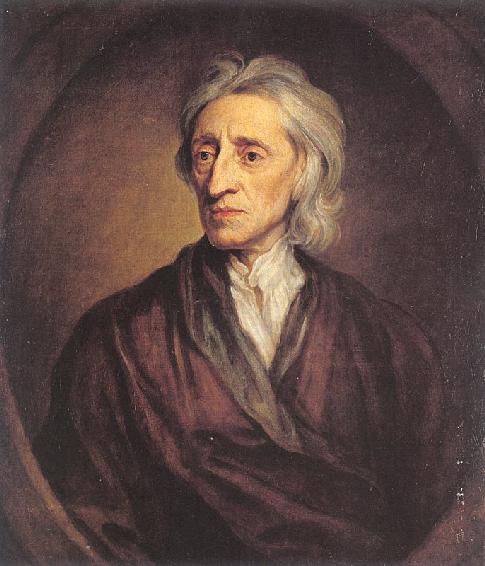
TO MOST, HIS picture is unrecognizable, but to the political science major, it is none other than John Locke. Locke is to blame for the oft misquoted phrase "separation of church and state." Locke, a man who described himself as an Anglican until he died, envisioned a government that was free from influence from the direct influence of the Church, but I wonder what even he would say about the path our nation is headed now.
A recent decision in a Federal Court in Wisconsin has ruled National Prayer Day to violate the Establishment Clause of the First Amendment. According to the Lemon Test, Federal endorsement of such a day is considered constitutional if (i) it has a secular purpose, (ii) its primary purpose is one that neither advances nor inhibits religion, and (iii) doesn't foster an excessive government entanglement with religion. It is hard to imagine how a national day for prayer can survive the Lemon Test, but this should not stop us from prayer ourselves. We, as Christians, do not need to be reminded by Congress to ask God for protection of this country. What this country needs is for us to pray everyday for the peace in this country. This is especially evident after yesterday's bomb scare in Times Square.

Here are links for more information on John Locke and National Day of Prayer. Take solace knowing that the overruling of National Prayer day will take years of appeals and resistance from the Congressional Prayer Caucus before it will take effect. Also, ask yourself if the framers and the political thinkers such as John Locke really intend where our nation is headed? Lastly, do the Establishment Clause and Free Exercise Clause of the First Amendment really guarantee freedom from religion, or is that a new ideology?

Saturday, March 27, 2010

Tolerating the Intolerable

A BIT LATE, but I finally decided on a New Year's Resolution. This year I will no longer tolerate that which I find to be intolerable. I'm willing to bet that most Christians believe their religion preaches tolerance. No. This is wrong. A matter of fact, the word "tolerance" is not mentioned in the Bible, not even once. Christianity teaches love and respect.

I admit, I did not understand this at first, but that was because I had an incorrect understanding of the definition of these words. The dictionary definition of the word "tolerance" is "a fair, objective, and permissive attitude toward those whose opinions, practices, race, religion, nationality, etc., differ." The same source states that "respect" is defined as "deference to a right, privilege, privileged person, or someone or something considered to have certain rights or privileges; proper acceptance or courtesy." To sum, tolerance is more of a passive allowance while respect is simply an acknowledgment of a person's rights.

G.K. Chesterton stated that "Tolerance is the virtue of the man without convictions." How can one tolerate something they feel so strongly against? We are Christian, and we should feel repulsed when someone speaks or acts against the teachings of the Truth. Are we not equally offended when confronted with a socially deplorable act such as drunk driving or rape? When a close friend or family member is slighted, do we not become defensive? Why then do we not do the same for acts displeasing in the eyes of God? The truth is, we would if we understood and loved our beliefs as much as we should.

Before I conclude, I remind that as Christians, we are called to treat one another with love and respect, just as Christ loved even those who persecuted Him. This is a very thin line, and must be navigated carefully.

Please pray for me and for another that He may touch all of us with strength and love to fight injustice according to His will.

Sunday, February 21, 2010

The Volume of our Actions

Our actions have a tongue of their own; they have an eloquence of their own, even when the tongue is silent. For deeds prove the lover more than words. - St. Cyril of Jerusalem

Wednesday, January 13, 2010

Love Like the Sun

IT IS TOUGH to find any positives from tragedies such as that which occurred Christmas Eve in Nag Hammadi. It is understandable to feel a certain anger and hatred to those who committed these heinous acts, and those related to them. It is also understandable to be upset at the Higher Being allowing such acts. More recently, the earthquakes in Haiti in which the death toll is feared to be in the "thousands."

I don't wish to talk about the "fairness" of what is going on in life, that subject has been heard and seems to be unconvincing to most. I'd rather talk about unconditional love. The type of love that asks for nothing in return. We must ask ourselves, where are we in our spiritual lives; are we able to forgive unconditionally?

Even after all this time
The sun never says to the Earth
"You owe Me."

Look what happens
with a love like that,
It lights the whole world.
-Hafiz

We sometimes are under the impression that there is a certain account we have with God. As if we are doing Him a favor. With that mentality, we believe that God owes us. How preposterous an idea! All we have is a gift from Him. In the widsom of the Church Fathers, we recite in the liturgy that "we offer you Your own gifts from what is Yours." The fool becomes angry, the wise is thankful, and the loving help their brethren.

Throughout all this calamity, Christ is glorified. Thousands of people offering care, prayers, and help to strangers. Unconditional love, seeking nothing in return, simply because others are suffering. Why do terrible acts happen? Because this is what we need to remember that we are all family on this Earth.

Wednesday, January 6, 2010

Merry Christmas

THE COPTIC CHURCH, along with many other Orthodox Churches celebrates the birth of Christ on January 7th. I could write about the humility of our Lord being born in a manger, His sinless nature of a virgin-birth, or maybe the wisdom and faith of the wise men for following a star to offer gifts to a child. There is much to be learned, but it's already known.

The fact is, the earliest church didn't even celebrate the birth of Christ. St. Clement of Alexandria mentions that the Egyptians of his time celebrated the Lord's birth on May 20. At some point by the 3rd or 4th century, the Western Churches began celebrating Christ's birth in the winter. Around that time it was agreed by the Church (capital "C") to celebrate the nativity of our Lord Jesus Christ on December 25 (or the 29th of Kiahk of the Coptic calendar). As a second grader asked me on Sunday, where the heck (not her words) did January 7th come from?

At that time, and up until about the sixteenth century, the calendar in use was the Julian calendar, named after Julius Caesar who implemented it about 50 years before Christ was born. This calendar considered the year to be 365.25 days and, like the Coptic Calendar, had a leap year every four years. As was soon found out by Pope Gregory XII (who had an interest in astrology and wondered why the vernal equinox was now at March 11, when it used to fall on March 21), the calendar year was actually 365.2422 days. This equates to a difference of a full day every 128.2 years.

Pope Gregory XIII decreed that the Julian calendar should be shortened by 3 days every 400 years. He did this by making every year divisible by 100 not a leap year unless it is divisible by 400 (so since the decree, 1700, 1800, and 1900 have not been leap years, although 1600 and 2000 have). Most strikingly, in 1582AD, he advanced the calendar by ten days and made October 5th into October 15th. The new calendar came to be known as the Gregorian calendar and is now widely used throughout the world.

So the 13 day gap between Western Christmas and Orthodox Christmas is explained (in case you missed it, the ten days Pope Gregory advanced the calendar and the three missed leap years in 1700, 1800, and 1900), but the question is, why don't we (the Copts) align ourselves to the Gregorian calendar? Simple! Because we have always followed the Coptic calendar and we simply continued to do so. Imagine celebrating Christmas in the middle of Kiahk? Yikes!

So there you have it, the reason us Copts get to take advantage of after-Christmas sales, and procrastination. Merry Christmas all, for today, the Word is born.

Thursday, December 17, 2009

Honor

OUR MOTHER APPEARED to our brethren in Egypt just a few short days ago. Link. In the same week, an article was published about the harassment of women in Egypt. Link. Where does one find the audacity to commit such horrid crimes? Our Mother pleads with us; there is only so much she can ward off the anger of our Father. Is it entitlement? Insecurity? Lack of faith? An assertion of power?

Or maybe I am the exception. Treating a woman with respect; a gift bestowed upon us. Nothing is weaker than using force with a woman. A strong man knows patience, long-suffering, composure. Yeah, perverse men find sexual gratification in dominance, but the underlying cause of this is that exact perversion. It's not a perversion in the sense of mental handicap, but an emptiness. Let us all not lose sight of what is important and fill that void, lest we fall into similar hardships.

Friday, December 4, 2009

Fr Daniil Sysoyev - Martyred


This story is copied from here: Click me


From the New York Times, November 19th -

MOSCOW —
The Rev. Daniil Sysoyev, a priest in the Russian Orthodox Church who was known for promoting missionary work among Muslims, was shot and killed in his parish church late Thursday night ...

From Archpriest Peter Perekrestov of Holy Virgin Cathedral, San Francisco:

On Thursday, November 19, 2009 35 year old Fr Daniel Sisoev, a very active and straightforward missionary priest in Moscow, was gunned down by a masked gunman inside the St. Thomas Church. Below is a statement his wife issued.


Fr. Peter is the priest at Holy Virgin Cathedral, where St. John Maximovitch relics' rest.